The surge of interest in short-term rental investing over the past several years has brought a wave of new entrants into the market, and not all of them arrived prepared. Some built their revenue projections around peak-season figures and treated them as annual averages. Others chose a market because someone they knew had done well there, without asking whether the conditions that made it work still applied. Many simply underestimated what it costs to run a vacation rental income property as a real business rather than a side project. The gap between investors who build sustainable portfolios and those who struggle almost never comes down to location or luck. It comes down to preparation.
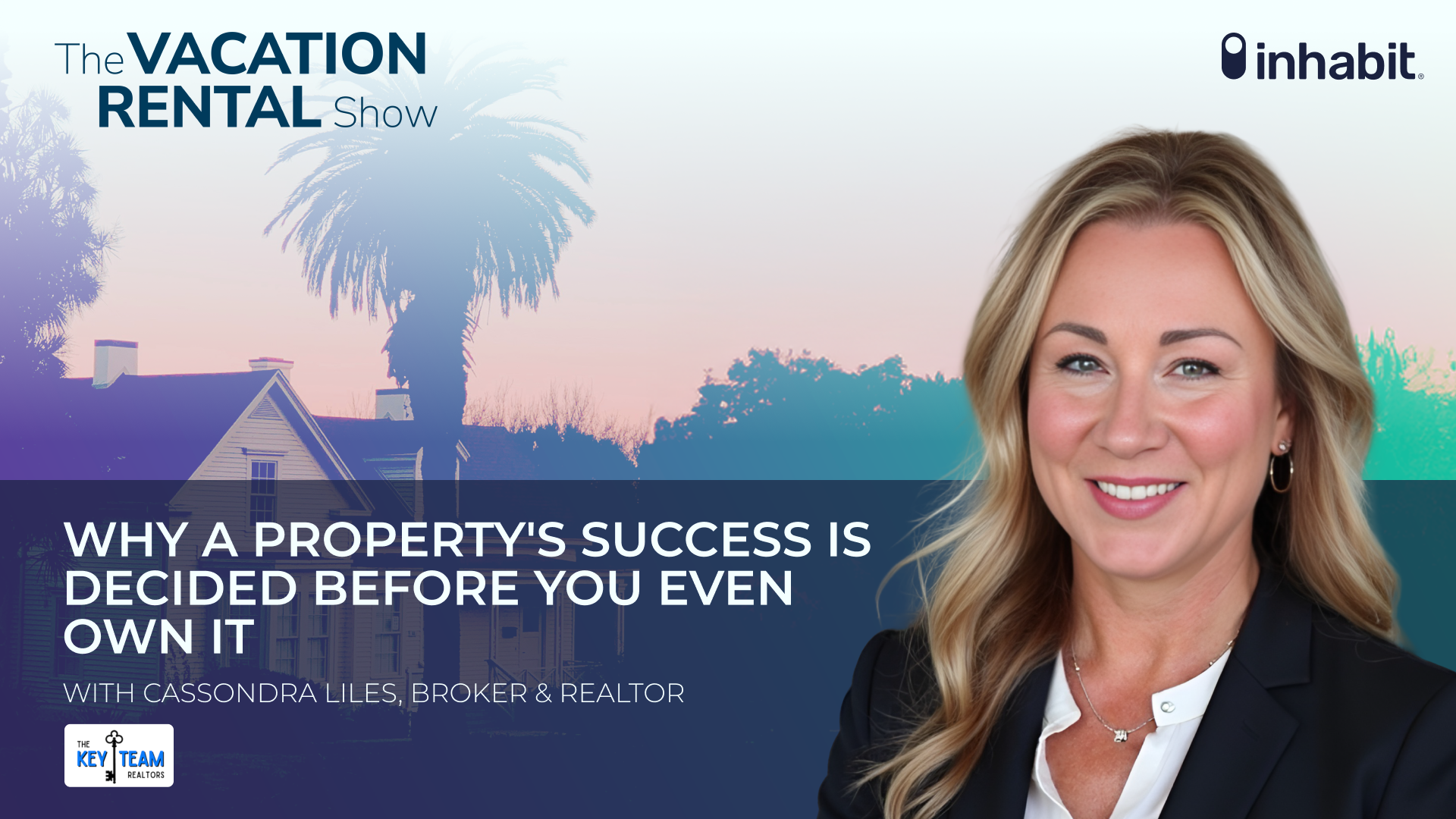
Cassondra Liles has spent 25 years in real estate brokerage and built a self-managed portfolio of eight short-term rental properties across multiple markets in North Carolina. As the broker of The Key Team and the author of Real Life Monopoly, she has a reputation for telling clients what they need to hear rather than what they want to. Her own entry into the short-term rental space was entirely unplanned: a historic property she purchased near East Carolina University (ECU) for her son's use during college became her first rental after she walked through the front door, recognized the opportunity, and promptly decided that college students were getting nowhere near it.
This episode is sponsored by Streamline Summit.
The Accidental First Purchase and the Learning Curve That Followed
So I had been doing real estate for about twenty years before I bought my first investment property, which is silly. And I look back and go, why? So what ended up happening, it was by mistake, actually.
Two decades into a successful brokerage career, Cassondra hadn't made the move into investment property. When she finally did, it happened almost entirely by accident: a purchase made with one purpose in mind became something completely different once she recognized the property's potential and made the decision that her son's college friends were not setting foot in it. She had no systems, no framework for evaluating the market she was entering, and no established process for managing cleaning, maintenance, or guest communication.
She read everything she could find, joined the North Carolina Real Estate Investors Association (NCREIA), and surrounded herself with investors operating at a larger scale than her own. From those early mistakes and that community, she built a functioning portfolio and eventually a book designed to spare other investors the same hard learning curve. The notes she took on every mistake she made became a presentation she taught at her real estate office, which became an outline, which became Real Life Monopoly.
What she draws from her own start isn't that experience guarantees success. It's that short-term rental investing requires the same structured approach as any other business, and the cost of skipping that structure gets paid eventually, one way or another.
Numbers Are the Language of Real Estate
So many investors work off emotion. You have to work off data. Numbers are the language of real estate, numbers are the language of business. You have got to know the numbers.
This is where the discipline Cassondra applies to vacation rental income investing diverges most sharply from the approach she sees too often in the market. A buyer falls in love with a property, anchors to the income potential they imagine it has, and moves forward before testing any of their assumptions against real data. In a favorable market environment, this occasionally works out. As interest rates have risen and many popular short-term rental markets have saturated, emotion-driven investing is producing a growing number of properties that simply don't pencil out.
The correction isn't complicated, but it requires stepping back from the emotional pull of a property and asking a structured set of questions before committing. What does the saturation rate in this market actually show? What are nightly rates doing in real data, not in a best-case projection? How does this property perform in off-peak months, not just the weeks everyone wants? What are the full ancillary costs beyond the mortgage and insurance? Those questions, answered honestly, tell a far more accurate story than the one an excited investor tends to tell themselves.
Cassondra points out something that holds true across all of real estate investing: every number in a business tells a story about how that business is performing. Short-term rental investing is no different, and the investors who understand that from the start are the ones who build portfolios that hold up through harder seasons.
The True Cost Picture Behind Every Short-Term Rental
You need to look at the saturation rate. You need to look at what the nightly rate's going for. You gotta cover your mortgage. You've gotta look at ancillary fees. How much is the cleaner gonna be? How much is landscaping gonna be? Those things can eat you up.
For every investor who enters the short-term rental investing space with a model built on mortgage and insurance, Cassondra has a list of costs that will surface regardless: cleaning, lawn care, heating, ventilation, and air conditioning (HVAC) replacement, carpet removal, furniture wear, stolen or damaged items, and the income gaps that seasonality creates in any coastal or mountain market. Each of these is manageable when anticipated. When it's not, it quietly erodes the return an investor thought they'd locked in.
Her standard approach for every property she walks into is to address the fundamentals before anything else. If there's carpet, she removes it. If the HVAC system is more than ten years old, she replaces it. These aren't optional improvements: they're the maintenance baseline that becomes an emergency expense during a busy rental season if not handled in advance, and a single unexpected repair can wipe out months of net vacation rental income.
The 1.25 rule gives investors a useful working benchmark: at minimum, a property's income should cover its costs at 125 percent. But that calculation only holds up if the investment property numbers going in are honest and complete. Investors who simplify the model in favor of a more optimistic outcome often find that their actual operating results look very different from their initial projections, especially once seasonality, theft, and capital expenditures enter the picture.
Goals First: Why the Hybrid Rental Model Works
I always say look with the end in mind, and you gotta really look at what your goals are. Is this a property that you just wanna make the most bang for the buck, or is it a hybrid property like mine are?
One of the most useful distinctions Cassondra draws is between two fundamentally different types of short-term rental investment. A pure-return property is exactly what it sounds like: the objective is to maximize vacation rental income, every vacancy is a cost, and every decision is filtered through a return on investment (ROI) lens. The hybrid rental model adds a personal dimension, a property that also serves as a family home, a beach retreat, or a mountain escape, where financial returns matter but aren't the only measure of what the investment is doing.
Understanding which type a property is meant to be before you buy changes almost every decision that follows: the location, the amenities, the pricing strategy, and the tolerance for occupancy gaps. Cassondra has properties in both categories, and she's clear that neither is inherently the better choice. What matters is being honest about which one you're purchasing before the closing, not discovering it afterward when expectations and reality no longer line up.
She spent a recent weekend letting her kids enjoy her beach house instead of booking it out to guests. That cost her roughly a thousand dollars in rental income for the week, and it's exactly what the property was designed to allow. A pure-return investor running the same calculation would arrive at a different answer, and that's the right answer for their situation. The point is that both investors should know their goals before they close.
The Opportunity Most Realtors Don't See
5.5% of Americans own a second home. Only 5% of realtors do. Less realtors than the general public own a second home, and I think that is crazy. Every listing we walk into, we should be asking, "Do I want to buy this first?"
The statistic Cassondra raises about realtors is one of the more striking observations in this conversation. Real estate professionals who spend their careers walking through investment-quality properties and understanding the market mechanics behind them are slightly less likely to own a second home than the general public. Her explanation is that most people, including experienced real estate professionals, don't look at their existing home equity as a tool for building a real estate investment strategy.
Roughly half of American homeowners are sitting on significant equity in their properties, and a meaningful number of them have never considered using it to purchase a short-term rental income property. The barrier is partly psychological: investing can feel like something that requires a separate, dedicated pool of capital rather than the assets already on hand. Cassondra makes the case that short-term rental investing is often more accessible than people assume once they stop treating the mortgage as their only lever and start looking at what they already hold.
This is the core message of Real Life Monopoly, available on Amazon, and the online course Cassondra is currently building for investors who want to approach the vacation rental market with a clear framework and an honest numbers model. Both start from the same place: know your goals, understand the full cost picture, and make every decision based on data rather than emotion.
Conclusion
Cassondra Liles has seen short-term rental investing go right and go wrong, often for the same fundamental reasons. The investors who build vacation rental income portfolios that last aren't the ones with the best properties or the most favorable market timing. They're the ones who did the work before they bought: clear goals, honest investment property numbers, a realistic understanding of the full cost picture, and the discipline to evaluate a market on data rather than hope.
She built her own portfolio the hard way, made every mistake she now tells others to avoid, and turned that experience into something she could share. Whether you're considering your first short-term rental investment or trying to understand why an existing property isn't performing the way it should, the principles she lays out in this episode are practical, direct, and grounded in 25 years of real market experience.